
Part of our guide to Denver storm drain repair and cleaning.
A Denver business should clean its storm drains when catch basins contain significant sediment, water drains slowly, or runoff begins spreading beyond the intended drainage area. Cleaning is also prudent before wetter seasons and after construction, landscaping, pavement work, or other activities that send debris toward the drainage system.
Commercial storm drainage is best managed through inspection and condition-based maintenance rather than waiting for a parking lot to flood. A clear record of what accumulates, where it accumulates, and how quickly it returns helps a property manager set a practical schedule for each site.
Why Commercial Storm Drains Need Routine Attention
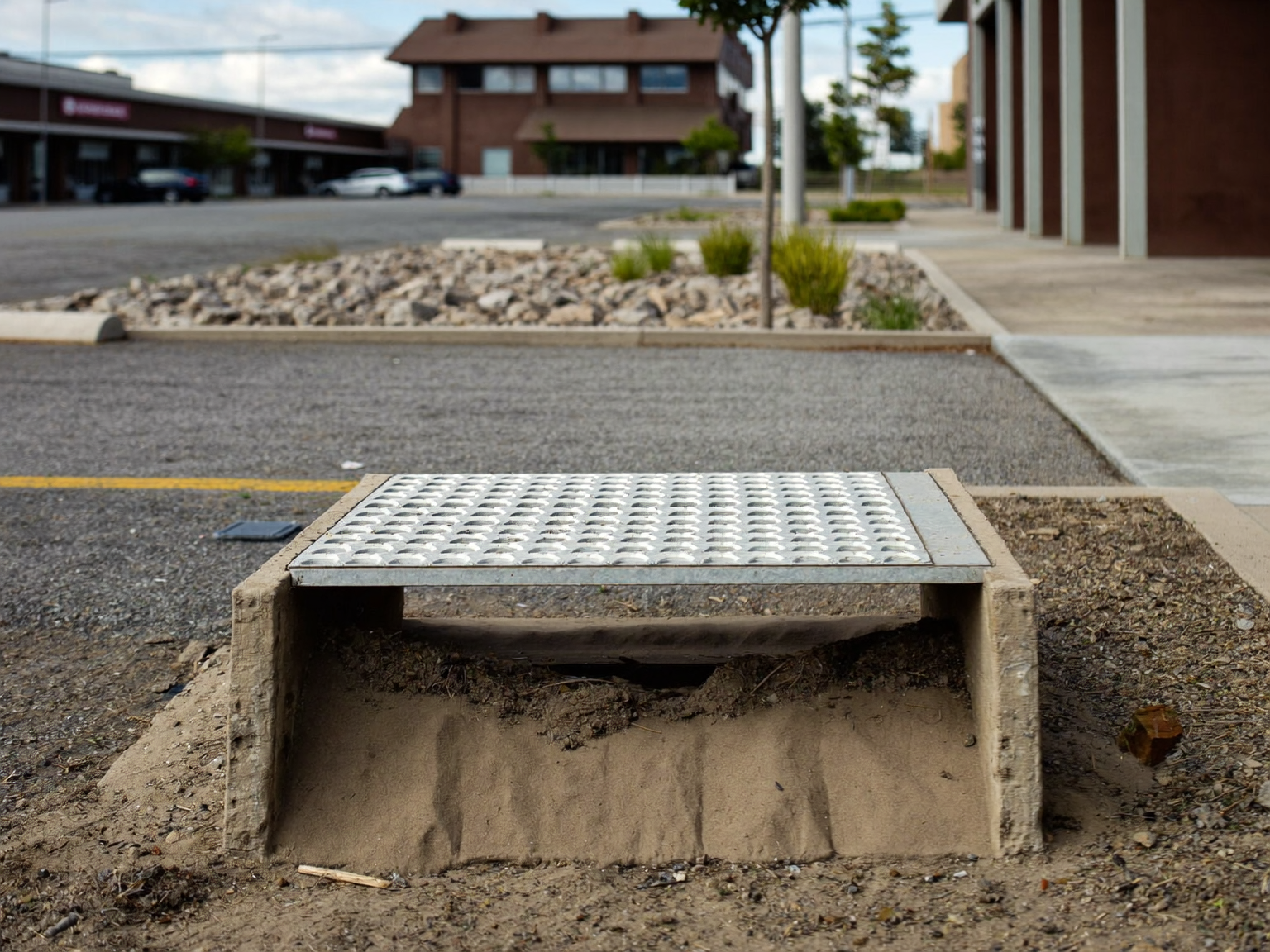
Parking lots, loading areas, private drives, and paved service yards collect more than rain and snowmelt. Windblown soil, pavement grit, leaves, trash, landscape mulch, spilled aggregate, and winter traction material can all move toward an inlet. Much of that material settles inside a catch basin before water reaches the downstream pipe.
That settling function is useful, but the basin has limited storage. As material builds up, it occupies sump capacity and can begin covering an outlet, restricting flow, or washing farther into the underground line. The result may be slow drainage at first, followed by ponding during heavier runoff.
Businesses looking at the entire drainage system, not just an isolated inlet, can start with Denver storm drain repair and cleaning. The system may include grated inlets, catch basins, area drains, connecting pipe, junction structures, detention features, and an approved point of discharge.
Build the Schedule Around the Property
A maintenance calendar is useful, but it should be adjusted using actual site observations. Two commercial properties in the same Denver metro community may have very different sediment loads. A fully paved retail lot with regular sweeping does not behave like an industrial yard with outdoor material handling, and a shaded office property with mature trees does not behave like an exposed warehouse site.
A practical program starts with an inventory. Identify every inlet, catch basin, area drain, trench drain, manhole, and visible outlet on the private property. Mark each structure on a site plan, assign it an identification number, and record its condition during inspections. If the drainage route is uncertain, professional locating or diagnostic work may be needed before maintenance decisions can be made.
Commercial storm drain maintenance can then be organized around the structures that collect material fastest instead of treating every basin as though it has the same workload.
What Storm Drain Cleaning Should Include
A proper cleaning plan begins by determining whether the problem is limited to the catch basin or extends into the connecting line. Removing leaves from a grate may restore surface entry while leaving the sump packed with sediment. Likewise, emptying the sump may not correct a downstream pipe obstructed by compacted material, roots, a displaced joint, or structural damage.
Commercial storm drain cleanout service may involve removing accumulated solids from the basin, clearing accessible outlets, cleaning appropriate connecting lines, and documenting what was found. The exact method should match the structure, pipe material, access conditions, and type of debris.

Warning Signs That Call for More Than Cleaning
Cleaning addresses accumulated material. It does not correct a crushed pipe, separated joint, failed basin wall, poor pavement slope, undersized drainage layout, or an outlet that has lost positive flow. If the same area continues to pond after the structures and lines are confirmed clear, the site may need a broader drainage assessment.
Cracked concrete around a basin, a grate that rocks under traffic, soil washing into the structure, pavement settlement, or recurring sinkholes may indicate structural movement. These conditions should not be treated as routine debris problems. Restrict traffic around an unsafe structure and have the basin, pipe, and surrounding base evaluated.
The symptoms can resemble those discussed in storm drain backup guidance for Denver properties, but commercial parking lots introduce traffic loads, pedestrian exposure, loading operations, and business access concerns that require a site-specific response.
Documentation, Disposal, and Site Responsibility
Commercial owners and managers should keep inspection dates, basin condition notes, photographs, cleaning records, and the approximate type of material removed. Records help explain why one inlet requires more attention than another and provide useful background when drainage performance changes.
Removed sediment should not simply be washed downstream or placed where runoff can carry it back into the system. Material handling and disposal depend on what the basin has collected and the rules that apply to the property. Sites with automotive, food service, industrial, or material-storage operations may require additional care. Confirm disposal, discharge, access, and permit requirements with the appropriate jurisdiction and facility representatives.
Responsibilities also vary by location and system ownership. A drain on private property may connect to infrastructure governed by a separate entity. Businesses in Aurora commercial service areas and Lakewood commercial service areas, for example, should confirm local requirements rather than assuming Denver procedures apply.
The Practical Standard for Timing
The right time to clean a commercial storm drain is before accumulated material restricts the basin or reaches the downstream line. For Denver businesses, that means checking drainage structures ahead of expected runoff, after debris-producing work, and whenever the parking lot begins draining differently than it normally does.
Do not base the decision only on whether the grate looks open. Inspect the catch basin below the surface, track sediment over time, and investigate recurring problems. That approach protects usable drainage capacity and gives the business a clearer basis for deciding when cleaning is enough and when repair is warranted.