Part of our guide to Denver water and sewer tap services.
A sewer tap in Lakewood is completed by confirming the serving sewer utility, obtaining its approval and any required jurisdictional permits, locating the main, excavating safely, making an approved connection, passing inspection, and restoring the site. The exact sequence depends on who owns the sewer main and whether work reaches a street, alley, or easement, so requirements should be confirmed with the serving utility and City of Lakewood before construction.
A sewer tap is the physical connection between a private building sewer and the public or district-owned sanitary sewer main. It may be needed for new construction, redevelopment, a change in building use, replacement of a failed connection, or separation of a property from a shared or outdated line.
Property owners planning work in Lakewood, Colorado should not assume every sewer main is administered through the same office. The first technical task is identifying the correct sewer provider and the agency responsible for the surface where excavation will occur.
Start by identifying the serving sewer system
Lakewood properties can be served through different utility arrangements. The sewer provider, roadway jurisdiction, property boundaries, and easements all affect who reviews the work and what must be approved.
Records may show the approximate main location, pipe size, material, depth, and available tap information. Those records are useful, but they are not a substitute for field verification. Underground records can be incomplete, based on older construction, or referenced to surface features that have changed.
The project team should establish:
- Which utility or sanitation district owns the sewer main
- Whether an existing tap or stub is already present
- Where the private building sewer will leave the structure
- Whether the route crosses private property, an easement, sidewalk, alley, or street
- Whether other buried utilities conflict with the proposed alignment
- Which agencies must approve excavation and restoration
The broader Lakewood tap process overview is a useful starting point, while the serving utility remains the final source for its current submittal and inspection requirements.
Design and approval come before excavation
Once the serving system is known, the proposed connection can be planned. The design normally identifies the connection point, pipe route, slope, material, cleanout arrangement, and relationship to other utilities. Commercial, multifamily, and redevelopment projects may require more extensive utility plans than a straightforward residential connection.
The sewer utility may review whether the proposed connection is acceptable for its system. Separate approval may be required for excavation within a public street, alley, sidewalk, or other right of way. Traffic control, pavement restoration, erosion control, or access conditions can also apply depending on the site.
Permit names and submittal steps can change. Owners and contractors should confirm current requirements directly with the serving sewer utility and the jurisdiction controlling the excavation area. Denver Sewer and Water can perform private underground contracting work, but it does not issue municipal permits or utility approvals.
For comparison, water tap installation in Aurora follows the same general principle that the serving utility controls connection approval, even though water and sewer construction use different components and inspection criteria. Requirements can also vary between Lakewood and nearby service areas such as Arvada.
Locating the main and other utilities
Before excavation, the contractor needs a reliable understanding of where the sewer main, proposed connection, and nearby utilities are located. Public utility markings are an essential safety step, but not every private line is included in a standard public locate request. Irrigation lines, private electrical feeds, site lighting, secondary sewer lines, and other owner-maintained systems may need separate investigation.
Sewer depth also affects excavation planning. A main shown at one elevation in records may differ from field conditions because of grade changes, prior road work, or incomplete documentation. Where the connection point is uncertain, controlled potholing or other exposure methods may be used to verify depth and horizontal location before the main excavation begins.
This information affects equipment selection, trench protection, spoil placement, traffic control, and the practical route of the new lateral. It can also reveal that the original proposed connection point conflicts with another utility.

Excavation and the tap connection
After approvals are in place and utilities have been marked, the work area can be prepared. If excavation reaches a public travel area, the approved traffic and pedestrian controls must be installed. Pavement, concrete, landscaping, or other surface materials are removed only as required for safe access.
The excavation must provide enough room to expose the sewer main without damaging it. Trench safety requirements depend on depth, soil, groundwater, nearby structures, and access. Denver metro soils can vary significantly over short distances, so support and excavation methods should be based on actual conditions.
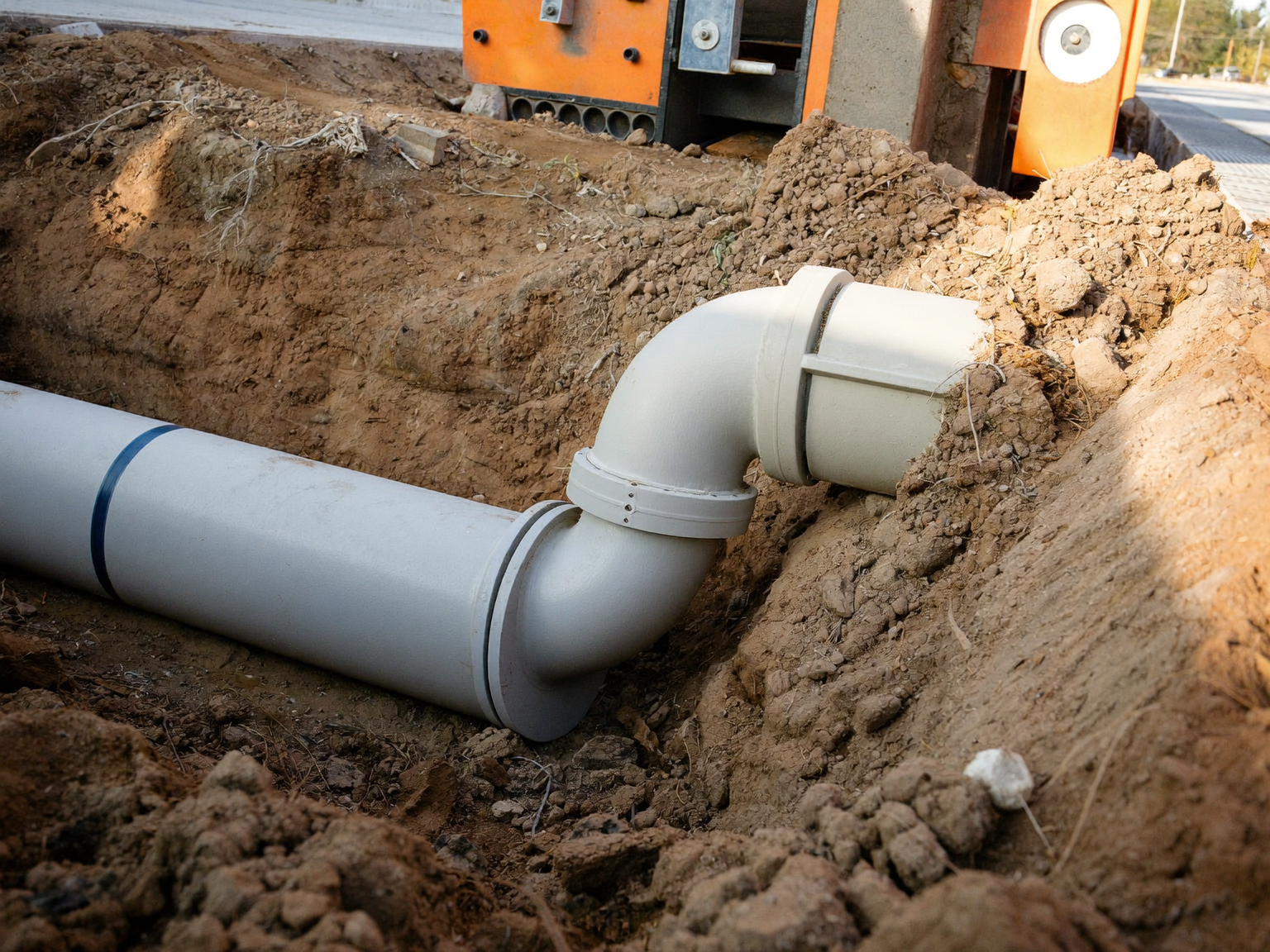
The connection method depends on the existing main material, utility standards, and whether the project uses an existing approved fitting or creates a new opening. The installed lateral must enter the main through an approved connection and follow the required alignment and grade. Improvised openings or unapproved fittings can create leakage, infiltration, protrusions, and maintenance problems.
Property owners can review Denver water and sewer tap services for the larger tap-work scope and sewer line tap installation and replacement for work focused specifically on sanitary sewer connections.
Inspection, testing, and documentation
The connection and private lateral generally must remain visible until required inspections are complete. Covering the work too early can prevent the inspector from seeing bedding, fittings, slope, pipe support, and the actual connection to the main.
Depending on the governing requirements, verification may include visual inspection, measurements, testing, or a camera review. The purpose is to confirm that the connection is properly assembled, aligned, supported, and suitable for service before backfill makes it inaccessible.
Any required correction should be completed and reinspected before the trench is closed. Project records may include inspection approvals, photographs, test results, or revised drawings showing the installed location. These records can be valuable during later repairs, renovations, or property transfers.
Restoration and project closeout
A sewer tap is not complete when the fitting is attached. The excavation must be backfilled, compacted, and restored according to the standards that apply to the site. Street pavement, alley surfacing, curb, gutter, sidewalk, landscaping, and private hardscape may each require different restoration methods.
Closeout also means confirming that inspections are recorded, temporary controls are removed, cleanouts are accessible, and the completed lateral functions as intended. If the route or tap location changed during construction, updated documentation should reflect the installed condition.
The sequence is similar in principle to other underground connection work, but it should not be confused with a fire-service installation. Fire line tap installation in Denver involves separate fire-protection criteria, components, testing, and approvals.
Planning a Lakewood sewer tap
The most reliable approach is to resolve ownership, approvals, location, and constructability before mobilizing excavation equipment. That preparation reduces the chance of discovering an unavailable connection point, utility conflict, missing approval, or unsuitable lateral route after the ground is open.
For a Lakewood sewer tap, ask the contractor to explain who owns the main, what records have been reviewed, how the connection point will be verified, which inspections are required, and what surfaces must be restored. The answers should be specific to the property rather than borrowed from a project in another jurisdiction.
Denver Sewer and Water is a private, family-owned underground line contractor. We are not Denver Water, the City of Lakewood, or any other municipal agency, and final permit and connection requirements remain with the applicable utility and jurisdiction.