
Part of our guide to Denver sewer line repair and replacement.
Sewer line replacement in Lakewood typically involves camera diagnosis, line locating, permit review, utility marking, excavation or trenchless installation, inspection, backfill, and surface restoration. Homeowners should expect the exact plan to depend on the existing pipe material, depth, route, access, and the requirements of the jurisdiction or sanitation provider serving the property.
Why Lakewood sewer replacements require property-specific planning
Lakewood has a mix of established residential areas, infill construction, commercial corridors, and properties with substantial landscaping. Two homes on the same street can have different lateral routes, pipe materials, connection details, and access limitations.
Some older Lakewood properties have clay tile or Orangeburg sewer laterals. Clay pipe can remain functional for a long time, but its short sections create numerous joints where roots can enter or soil movement can produce offsets. Orangeburg is a fiber-based pipe that can deform, flatten, blister internally, or lose structural strength as it ages. Neither material should be condemned based on age or appearance alone. The decision should be based on what a camera inspection shows and whether the pipe can still maintain reliable flow.
Homeowners can review the broader warning signs in how to know when sewer line replacement may be needed. For work specifically serving the area, the Lakewood service area page provides local context.
What the contractor should confirm before digging
A replacement plan should define more than the general statement that the sewer is bad. It should identify the affected section, likely limits of work, proposed pipe material, installation method, access points, and restoration assumptions.
Important preconstruction checks include:
- The lateral route from the building to the connection
- Pipe depth and changes in direction
- Existing cleanout locations
- Nearby water, gas, electric, communication, and irrigation lines
- Driveways, patios, retaining walls, mature trees, and fences along the route
- Whether the defect is isolated or extends through most of the lateral
- Whether the downstream connection is accessible and serviceable
- Which agency, district, or utility has authority over the connection
A replacement recommendation should match the evidence. An isolated failure may be suitable for a sectional repair, while widespread deformation, repeated joint failure, or a structurally unreliable Orangeburg line may justify replacement. The practical distinctions are covered in sewer line repair versus replacement.
Lakewood permits and utility coordination
Permit responsibility depends on where the property lies, who owns the receiving sewer, and whether the work enters a street, sidewalk, easement, or other public area. A Lakewood mailing address does not by itself identify every authority involved.
Work inside Lakewood may require coordination with the city, the serving sanitation district, or another utility owner. Jefferson County requirements can enter the process when a property or work area falls under county jurisdiction, affects a county-controlled right-of-way, or requires a county approval. Properties near municipal boundaries can be especially important to verify because the mailing city, governing jurisdiction, and utility provider may not be the same.
The contractor should identify the expected permit and inspection path before construction. Property owners should confirm current requirements with the City of Lakewood, Jefferson County, their sanitation district, or the applicable utility authority. Requirements can change, and each agency may have its own standards for pipe, bedding, connections, traffic control, inspections, and restoration.
Open-cut and trenchless replacement
The installation method depends on the condition and geometry of the existing lateral. Open-cut excavation exposes the pipe directly and provides full control over grade, bedding, fittings, and transitions. It is often necessary where the line has a belly, severe offsets, a collapse, multiple direction changes, or a connection that must be rebuilt.

Trenchless methods can reduce continuous surface excavation when the existing route and pipe condition are suitable. Pipe bursting, for example, uses the old line as a path for the replacement pipe, but it still requires access pits and adequate clearance from nearby utilities. A badly deformed Orangeburg line, sharp bends, uncertain connections, or close utility conflicts may change what is feasible.
The goal is not to select the method with the least visible digging at all costs. The goal is to install a structurally sound lateral at proper grade without damaging surrounding utilities or leaving an unreliable connection. Homeowners can compare the available approaches through Denver sewer line repair and replacement information and the dedicated sewer line replacement and installation service.
What happens during construction
The crew first establishes the work zone and protects practical access around the property. Public utilities should already be marked, and any required private locating should be complete. Pavement, concrete, landscaping, or other surfaces within the excavation limits are then removed as needed.
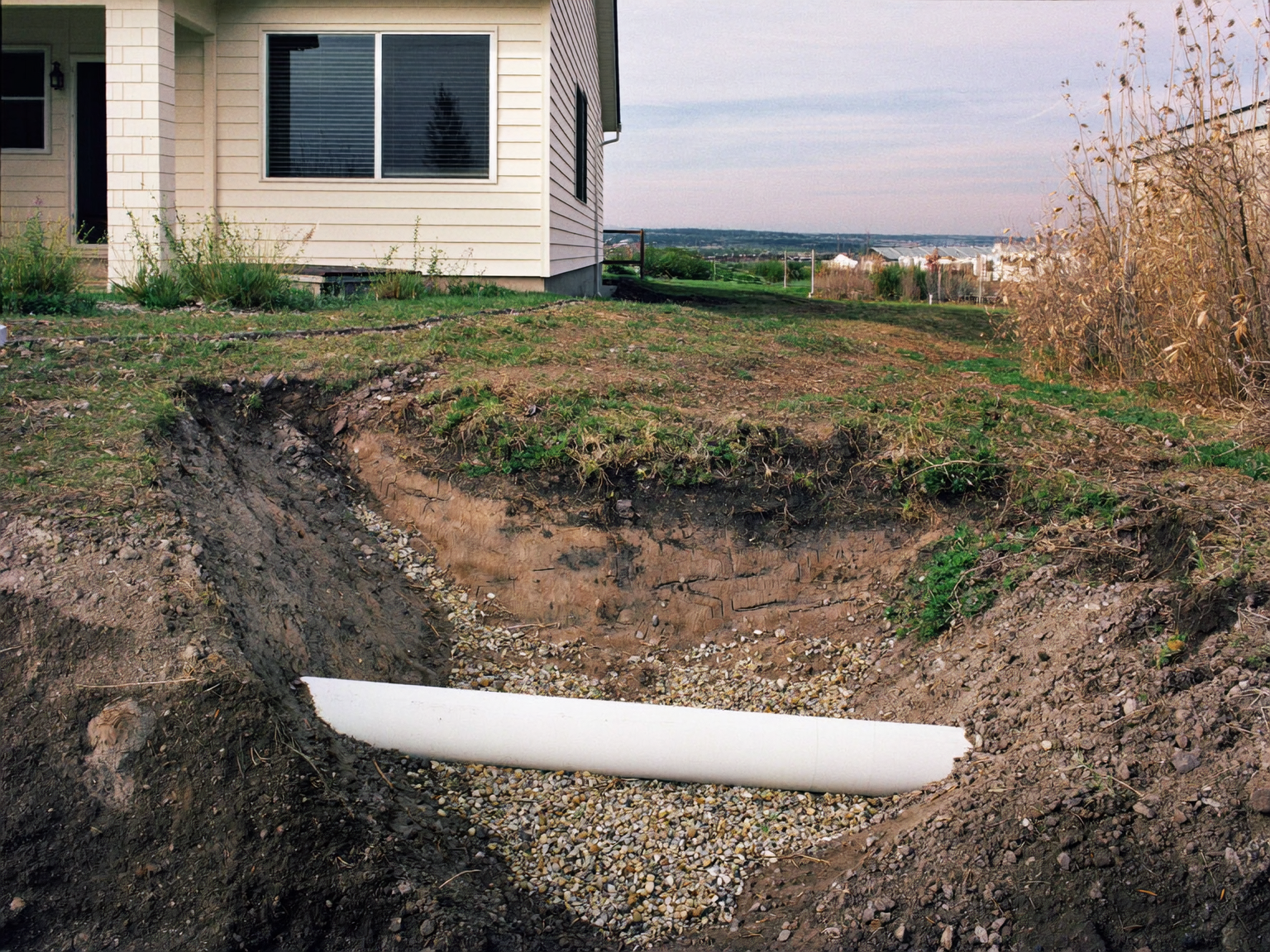
For open-cut work, the crew excavates to expose the failed lateral, supports or slopes the excavation as conditions require, removes the old pipe, and prepares the trench bottom. New pipe is installed with compatible fittings and controlled grade. Transitions at the building side and public sewer side require particular attention because poor connections can leak, catch waste, or allow roots to enter.
For trenchless work, the crew excavates access pits at planned locations, prepares the old line, and installs the new pipe through the existing alignment. The exposed connections are then completed and checked. Regardless of method, the finished system should provide a continuous path without unintended low spots.
Inspection, backfill, and restoration
Before the excavation is closed, the new pipe and connections may need to be inspected by the authority having jurisdiction. The applicable inspector may review pipe material, bedding, slope, fittings, connection work, and other required details. Inspection steps should be confirmed during permitting rather than assumed.
Backfill is placed in a controlled manner to protect the new pipe and reduce settlement risk. Excavated soil is not always suitable for immediate reuse around the pipe, especially if it contains large rocks, construction debris, or material that cannot be compacted properly. Bedding and backfill specifications should follow the approved plan and jurisdictional requirements.
Surface restoration comes after the underground work is accepted and backfilled. The contract should distinguish between rough grading and final restoration. Asphalt, concrete, sod, irrigation, fencing, and planting beds may be included, excluded, or handled by another contractor. Written restoration limits prevent confusion after the sewer is operating again.
Preparing a Lakewood property for replacement
Before the scheduled start, move vehicles away from the work zone and provide access to gates, cleanouts, utility rooms, or crawl spaces identified during planning. Turn off irrigation near the excavation and identify privately installed features that may not appear on utility records. Pets and children should remain away from equipment, open excavations, pipe materials, and temporary fencing.
It also helps to discuss parking, material staging, spoil storage, and neighbor access before work begins. These details are especially important where side yards are narrow or a driveway provides the only practical equipment route. Similar access constraints occur in nearby communities such as Wheat Ridge and Arvada, but permit authority and utility ownership still need to be verified for each address.
Denver Sewer and Water is a private, family-owned underground line contractor, not Denver Water, the City of Lakewood, Jefferson County, or another municipal agency. A properly planned Lakewood sewer replacement should leave the owner with a clear diagnosis, an approved installation method, documented inspections, and a defined restoration scope rather than simply a new pipe buried without records.